Queen Elizabeth National Park spans the equator line; monuments on either side of the road marking the exact spot where it crosses latitude 00.

The park was founded in 1952 as Kazinga National Park and renamed two years later to commemorate a visit by Queen Elizabeth II of England.

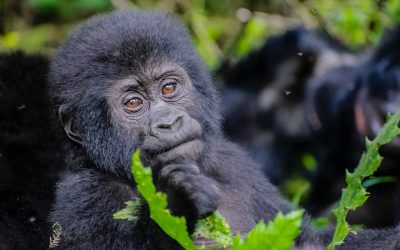
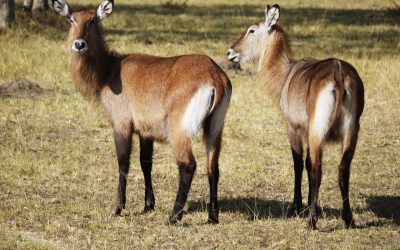
The park is home to over 95 mammal species and over 600 bird species.

The Katwe explosion craters mark the park’s highest point at 1,350m above sea level, while the lowest point is at 910m, at Lake Edward.

Queen Elizabeth National Park is understandably Uganda’s most popular tourist destination. The park’s diverse ecosystems, which include sprawling savanna, shady, humid forests, sparkling lakes, and fertile wetlands, make it the ideal habitat for a classic big game, ten primate species including chimpanzees, and over 600 species of birds.

Set against the backdrop of the jagged Rwenzori Mountains, the park’s magnificent vistas include dozens of enormous craters carved dramatically into rolling green hills, panoramic views of the Kazinga Channel with its banks lined with hippos, buffalo, and elephants, and the endless Ishasha plains, whose fig trees hide lions ready to pounce on herds of unsuspecting Uganda kob.

As well as its outstanding wildlife attractions, Queen Elizabeth National Park has a fascinating cultural history. There are many opportunities for visitors to meet the local communities and enjoy storytelling, dance, music, and more. The gazetting of the park has ensured the conservation of its ecosystems, which in turn benefits the surrounding communities.

Most of Queen Elizabeth comprises open grassland and savannah which tends to be moist and woody in the west than the eastern part, Thorny Acacia dominates this savannah habitant with the high concentration of candelabra shrub a cactus that grows along the kazinga channel and on the kasenyi plains.

Queen Elizabeth supports at least 95 species of mammals,it boasts of 20 carnivores like the Lion,Leopards, side stripped jackal and spotted hyena among others.

Uganda’s Queen Elizabeth National Park is truly a Medley of Wonders!

More Destinations

Kibale National Park

Kibale National Park

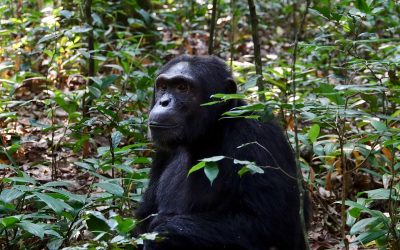
Kibale’s most popular activity is the Kanyanchu Primate Walk. Thirteen species can be sought, and a good variety of diurnal monkeys invariably encountered, but the stars of this twice-daily show are chimpanzees. Kibale’s most popular activity is the Kanyanchu Primate...

read more
Lake Mburo National Park

Lake Mburo National Park

Wetland habitats comprise 20% of the park’s surface The parks’ precarious past has seen wildlife virtually eliminated several times: firstly, in various attempts to rid the region of tsetse flies, then to make way for ranches, and finally as a result of subsistence...
read more
Bwindi Forest National Park

Bwindi Forest National Park

The Mubare gorilla group was the first to become available for tourism in Uganda in April 1993. Nine groups are now habituated for tourism, and one group for research. Spread over a series of steep ridges and valleys, Bwindi is the source of five major rivers, which...
read more
Murchison Falls National Park

Murchison Falls National Park

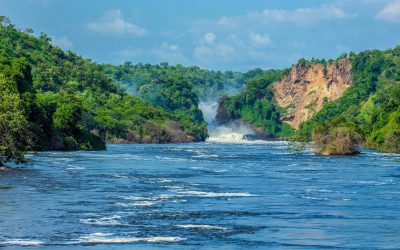
Murchison Falls National Park sits on the shore of Lake Albert, in northwest Uganda. It’s known for Murchison Falls, where the Victoria Nile River surges through a narrow gap over a massive drop. Park wildlife includes elephants and hippos, and there are chimpanzees...

read more